
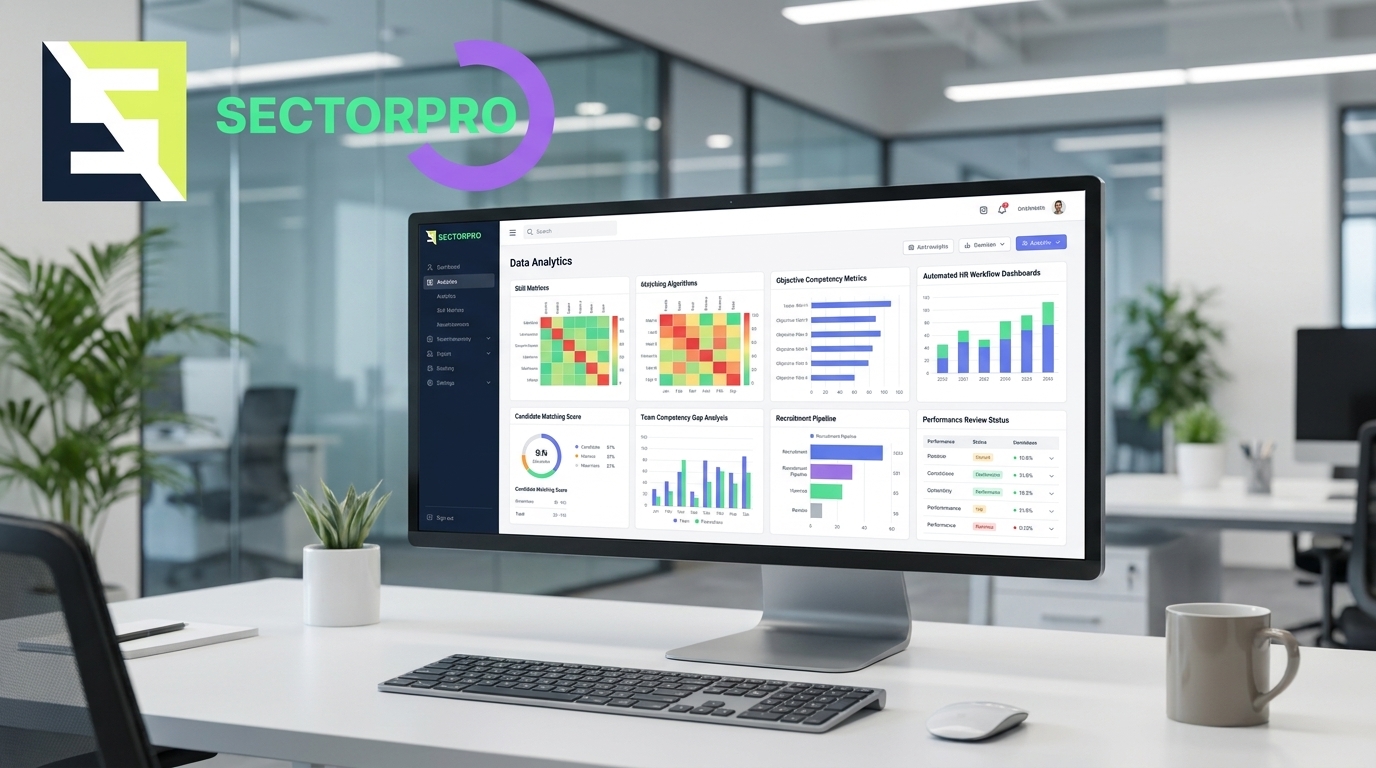
The Dutch SME (MKB) market faces persistent structural challenges in talent acquisition. Traditional recruitment methodologies rely on curriculum vitae analysis and manual interviewing. These legacy processes introduce significant human bias and fail to accurately predict candidate performance. The transition to skills-based recruitment requires the deployment of advanced technological infrastructures. Implementing artificial intelligence (AI) and gamified assessment frameworks provides a standardized, objective mechanism for talent evaluation. SectorPro functions as a specialized system designed to bridge the operational gap between MKB employers and qualified job seekers. This platform targets specific industries, including Tech, Healthcare, Construction, and Cleaning. The system utilizes interactive evaluations to quantify applicant capabilities. Objective data points replace subjective human judgment. This document outlines the technical procedures and system mechanisms required to optimize recruitment workflows. The following sections detail the configuration and execution of gamified assessments, AI-driven candidate matching, and automated human resources operations. Following these protocols ensures an efficient, data-driven approach to SME talent acquisition.
Configuration of objective talent selection algorithms
The implementation of artificial intelligence in the talent selection process necessitates a fundamental shift from subjective evaluation to quantitative data analysis. Unconscious human bias distorts traditional hiring outcomes. The SectorPro platform mitigates this distortion through the deployment of objective talent selection algorithms. These algorithms process multi-dimensional data sets generated by candidate interactions. The system requires administrators to define the required skills profile for a specific vacancy. These profiles establish the baseline metrics for evaluation.
The sequential execution of the matching protocol operates as follows:
1. Requirement Parsing: The system initiates the parsing module to analyze the defined role requirements.
2. Data Cross-referencing: The AI matching engine cross-references candidate assessment data against the established baseline metrics.
3. Metric Assignment: The algorithmic processing unit assigns a numerical compatibility score to each applicant.
This numerical scoring mechanism ensures all candidates are evaluated against identical criteria. The data-driven recruitment methodology standardizes the comparative analysis of the applicant pool. The AI engine continuously calibrates its predictive models based on historical hiring outcomes and subsequent employee performance data. This continuous calibration loop refines the accuracy of future compatibility scores. Employers in the Dutch MKB sector must rely on this algorithmic output to execute evidence-based hiring decisions. The manual screening of applications is entirely superseded by automated data processing. The system isolates the most relevant talent by filtering candidates exclusively based on their demonstrated competencies. This procedural shift guarantees an equitable evaluation environment and maximizes the probability of identifying high-performing personnel. Administrators must review the generated compatibility reports to authorize the progression of candidates to the final interview stages.
The algorithms utilize natural language processing to extract relevant capability indicators from candidate inputs. These indicators are then mapped to an established competency ontology. The ontology defines the hierarchical relationships between specific technical skills and generalized cognitive abilities. The system assigns weighted values to each skill node based on the configured job requirements. The cumulative calculation of these weighted values constitutes the final compatibility score. This strict computational approach guarantees that the recruitment workflow remains completely data-driven. The elimination of demographic variables from the initial calculation further reinforces the objectivity of the talent selection framework.
Deployment of gamified assessment protocols
The evaluation of candidate capabilities requires interactive mechanisms to capture authentic behavioral and cognitive data. Traditional testing formats generate high levels of applicant anxiety and often yield inaccurate performance metrics. The SectorPro system utilizes gamified assessments to execute skills evaluation protocols. Gamification introduces game design elements into non-game environments. This methodology increases user engagement while simultaneously extracting precise psychometric data.
The deployment sequence for gamified assessments involves several mandatory steps:
1. Module Selection: The administrator selects the appropriate assessment module based on the targeted competency profile.
2. Resource Provisioning: The system provisions a secure, unique uniform resource locator for the candidate.
3. Interactive Execution: The candidate accesses the interactive environment to complete a series of standardized challenges.
These challenges are engineered to measure specific variables such as problem-solving velocity, spatial reasoning, and decision-making accuracy under simulated stress conditions. The platform records all micro-interactions during the session, including response latency, click patterns, and error recovery rates. This telemetry data is compiled into a comprehensive behavioral profile. For MKB employers, this data provides a granular view of an applicant’s soft and cognitive skills. The interactive nature of the assessment modules ensures a high completion rate compared to legacy questionnaire formats. The system architecture processes the raw telemetry data and translates it into standardized percentile rankings. These rankings compare the individual candidate’s performance against a normative database of previous applicants. The resulting psychometric report is automatically appended to the candidate’s digital profile within the platform. The utilization of gamified assessments guarantees that the evaluation process captures actual candidate capabilities in a simulated operational context.
The assessment modules are modular and can be dynamically reconfigured. For example, spatial reasoning modules are automatically prioritized when evaluating candidates for technical or construction-related vacancies. Conversely, modules assessing divided attention and rapid task switching are prioritized for healthcare or cleaning sector profiles. The platform utilizes a real-time data ingestion pipeline to process the assessment telemetry. This pipeline ensures that the employer receives the standardized percentile rankings immediately upon the candidate’s completion of the module. The integration of gamified assessment protocols constitutes the core data acquisition strategy for the entire skills-based recruitment system.
Execution of skills-based matching methodologies
The transition from credential-based screening to skills-based matching constitutes a fundamental operational upgrade for MKB human resources departments. Curriculum vitae documents prioritize historical employment and formal education. These historical records do not function as reliable indicators of future occupational performance. The SectorPro platform enforces a strict capabilities-first matching methodology. The system architecture mandates that actual candidate competencies dictate the matching algorithm outputs.
The execution of this methodology requires the strict alignment of employer requirements with candidate capabilities:
1. Parameter Input: The employer inputs the operational parameters and mandatory technical skills into the system interface.
2. Matrix Generation: The platform translates these inputs into a formalized skills matrix.
3. Capability Comparison: The matching engine compares the employer’s skills matrix against the validated capabilities documented in the candidate profiles.
This computational process disregards factors such as previous job titles or institutional prestige. The engine calculates an exact overlap percentage between the required skills and the candidate’s verified skill set. This overlap percentage dictates the ranking of candidates within the employer’s dashboard. The implementation of skills-based matching ensures a higher quality talent pool. The system actively surfaces non-traditional candidates who possess the requisite operational capabilities but lack standard academic credentials. This broadens the available talent supply for the Dutch SME market. The matching engine also identifies adjacent or transferable skills. If a candidate lacks a specific technical proficiency, the system analyzes their cognitive assessment data to determine their capacity to acquire that proficiency rapidly. The predictive nature of the skills-based matching algorithm allows employers to make hiring decisions based on verified potential. The platform generates a comprehensive gap analysis report for each matched candidate. This report details the specific competencies the candidate possesses and highlights any operational areas requiring supplementary training.
The matching engine utilizes a multi-layered relational database to manage the skills ontology. This database continuously updates the taxonomy of skills based on emerging industry standards. The algorithm executes complex queries against this database to perform the capability comparisons. The execution speed of the matching process allows employers to instantly review candidate compatibility scores upon the publication of a new vacancy. This automated matching methodology completely replaces the manual review of static documents, thereby increasing the efficiency and accuracy of the talent acquisition pipeline.
Integration of sector-specific portal parameters
The recruitment requirements within the Dutch MKB market vary significantly across different industrial sectors. A generic algorithmic approach fails to account for the specialized operational demands of discrete industries. The SectorPro system architecture incorporates sector-specific portals to localize the recruitment variables. These portals establish isolated digital environments tailored specifically for the Tech, Healthcare, Construction, and Cleaning sectors.
The configuration of a sector-specific portal requires the adjustment of baseline algorithmic parameters:
1. Classification Selection: The system administrator selects the target industry classification code during the initial portal setup.
2. Taxonomy Loading: The platform automatically loads the designated skills taxonomy associated with the selected industry.
3. Algorithm Calibration: The matching engine calibrates its weighting algorithms to prioritize the localized competency requirements.
Within the Construction sector portal, the system prioritizes safety compliance certifications and physical spatial reasoning metrics. Within the Healthcare sector portal, the algorithms emphasize emotional intelligence indicators and rapid decision-making capabilities under stress. The Tech portal parameters focus heavily on specific programming languages, logical sequencing, and advanced problem-solving assessment scores. The Cleaning sector portal calibrates for reliability metrics, attention to detail, and time management proficiencies. This targeted configuration process streamlines the recruitment pipeline for both the employer and the applicant. Candidates navigating a sector-specific portal interact exclusively with relevant assessments and vacancy descriptions. This isolation of variables eliminates unnecessary data processing and improves the signal-to-noise ratio within the matching engine.
The sector-specific approach provides MKB employers with a highly focused talent pool. The database architecture segments candidate profiles based on their primary industrial classification. The system prevents cross-contamination of candidate data between incompatible sectors. This strict segmentation guarantees that employers only review applicant profiles that possess the baseline contextual knowledge required for their specific operational environment. The routing of candidates into these sector-specific portals is managed through an initial categorization gateway. Upon account creation, candidates select their primary operational domains. The system then dynamically renders the user interface to reflect the chosen sector. The assessment modules and the available vacancy lists are instantly filtered to match the portal parameters. This integration of sector-specific portal parameters ensures high precision in the subsequent matching phase.
Optimization of employer branding via reward systems
The acquisition of younger demographics, specifically Generation Z professionals, requires optimized employer branding and continuous user engagement. The traditional application procedure is characterized by opaque processes and extended periods of inactivity. This structure induces high abandonment rates among digital-native job seekers. The SectorPro platform deploys an integrated reward system to optimize candidate engagement and elevate the employer brand of participating SMEs.
The optimization of engagement involves the systematic distribution of digital incentives throughout the application lifecycle:
1. Task Detection: The system detects the completion of a specific task, such as finishing an assessment module or uploading documentation.
2. Point Allocation: The gamification engine automatically allocates a predefined quantity of points to the user’s account.
3. Achievement Unlocking: The platform unlocks digital badges or achievements based on accumulated point thresholds.
This structured reward mechanism maintains the applicant’s interaction with the platform. The accumulation of points provides immediate, positive feedback for compliance with the recruitment process. The system displays leaderboards or progress indicators within the candidate dashboard. This visible progression mitigates the uncertainty typically associated with job applications. For the MKB employer, this feature serves as an automated branding tool. The platform presents a modern, transparent, and responsive digital environment. The positive user experience generated by the reward system directly associates the employer’s brand with technological proficiency and candidate-centric processes.
The gamification engine records the candidate’s responsiveness to the reward stimuli. This data provides secondary indicators regarding the applicant’s motivation and engagement levels. The system allows candidates to redeem accumulated points for specific internal benefits, such as priority application reviews or access to advanced training materials. The implementation of this reward architecture transforms the application process from a passive administrative requirement into an active, engaging digital experience. The reward system operates on an event-driven architecture. User actions trigger asynchronous events within the platform backend. These events are processed by the incentive allocation module, which updates the relevant database tables containing user metrics. The user interface subsequently polls these tables to render the updated point balances and newly acquired digital badges. This continuous feedback loop ensures that the candidate receives instantaneous confirmation of their progress.
Automation of human resources workflows and data management
The administrative overhead associated with talent acquisition severely limits the operational efficiency of small and medium-sized enterprises. The manual execution of communication protocols, data entry, and interview scheduling consumes critical resources. The SectorPro system functions as a comprehensive human resources technology partner designed to automate these administrative workflows. The platform centralizes all recruitment operations within a single, secure digital environment.
The automation of the HR workflow requires the systematic integration of distinct data processing modules:
1. Profile Aggregation: The platform automatically aggregates all incoming candidate profiles generated by the sector-specific portals.
2. Algorithmic Execution: The system executes the AI-driven matching algorithms and generates ranked candidate shortlists without manual intervention.
3. Communication Dispatch: The communication module automatically dispatches standardized notification protocols to candidates regarding their application status.
This centralized data management architecture eliminates the requirement for fragmented software applications or spreadsheet-based tracking. The employer dashboard provides a unified interface for reviewing assessment scores, skills matrices, and algorithmic compatibility reports. The system automates the preliminary screening phases entirely. The HR personnel interact exclusively with the refined output of the matching engine. The platform facilitates automated interview scheduling through calendar integration application programming interfaces. The system proposes available time slots to the candidate and automatically synchronizes confirmed appointments across the employer’s digital infrastructure. The automation of these workflows significantly reduces the time-to-hire metric. The data management protocols comply with all relevant data privacy regulations by executing automated data retention and deletion policies.
The centralization of information allows for the generation of comprehensive analytics reports. Administrators can export data regarding cost-per-hire, assessment completion rates, and matching accuracy. The deployment of this automated infrastructure allows MKB personnel to redirect resources from administrative tasks toward strategic talent integration and onboarding procedures. The automated workflow engine utilizes conditional logic to manage candidate progression. If a candidate fails to achieve the minimum required compatibility score, the system automatically triggers a rejection protocol and archives the profile. If the threshold is met, the system initiates the subsequent verification protocols. This deterministic routing of candidate data guarantees consistent execution of the recruitment policy and completely removes the administrative burden from the SME operators.
Conclusion
The implementation of advanced technical systems is mandatory for the modernization of the Dutch SME talent acquisition process. Legacy methodologies reliant on curriculum vitae screening and manual administration are statistically inefficient and subject to critical cognitive biases. The deployment of artificial intelligence algorithms ensures the objective and equitable evaluation of all candidate profiles. The integration of gamified assessment protocols guarantees the accurate extraction of psychometric data and verified behavioral competencies. The transition to a skills-based matching framework prioritizes demonstrated operational capabilities over historical documentation. SectorPro provides the necessary digital infrastructure to execute these complex processes autonomously. The utilization of sector-specific portals calibrates the matching algorithms to the exact operational requirements of the Tech, Healthcare, Construction, and Cleaning industries.
The activation of automated reward systems sustains user engagement and modernizes the employer brand for digital-native applicants. The complete automation of human resources workflows eliminates administrative redundancy and centralizes data management operations. MKB employers must adopt these technological protocols to secure a competitive advantage in the labor market. The adherence to data-driven, skills-based recruitment methodologies ensures the precise alignment of candidate capabilities with organizational requirements. This alignment maximizes operational efficiency and reduces personnel turnover. The systematic application of the protocols outlined in this document provides a definitive blueprint for structural reform within SME human resources departments. The reliance on quantified performance metrics and automated data processing constitutes the standard for all future recruitment operations.
