
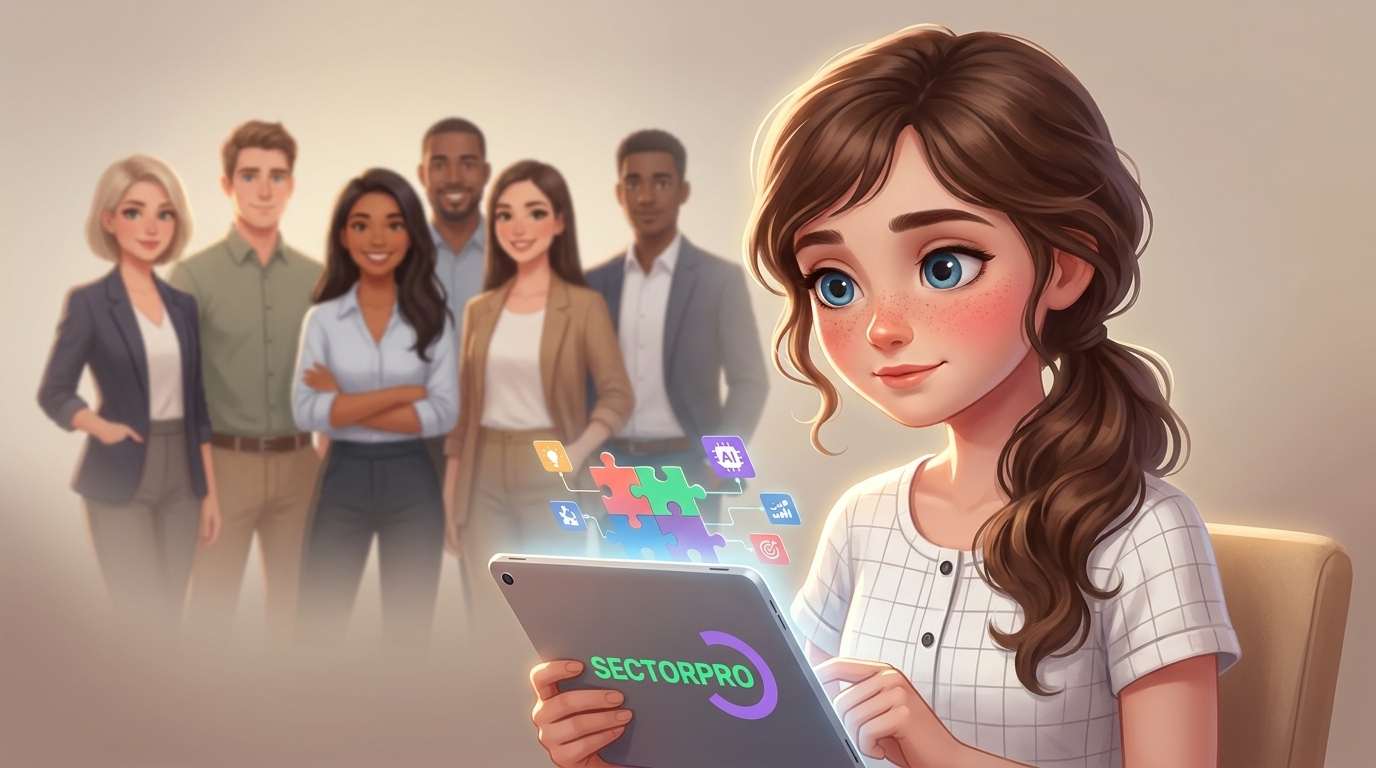
The modern marketplace is a battlefield, and the most fiercely contested territory is human talent. For small and medium-sized enterprises, the pursuit of finding the right candidate often feels like attempting to catch lightning in a fragile glass jar. The old tools of the trade—crumpled resumes, rehearsed interview questions, and subjective gut feelings—are no longer sufficient to secure the brilliant minds needed to drive innovation. In the quiet corridors of these growing businesses, a silent crisis unfolds constantly: the unintentional rejection of capable individuals due to unconscious bias and outdated screening methods. Yet, amidst this frustration, a beautiful new narrative is being written. It is a story of profound transformation, driven by the remarkable capabilities of artificial intelligence and interactive evaluation. By stepping away from the archaic paper trail and embracing a purely skill-based approach, companies are discovering a rich, untapped reservoir of human potential. This is not merely about filling an empty vacancy; it is about restoring fairness, dignity, and precision to the way we invite people into our professional lives.
The crushing weight of a thousand unread resumes
Elias sat in the dim light of his small office, the glow of his monitor illuminating the deep, exhausted lines etched into his face. As the operations director for a rapidly expanding enterprise managing both specialized tech solutions and commercial cleaning contracts, his energy was consumed by a relentless tide of human capital management. Before him on the screen lay an inbox overflowing with hundreds of identical, sterile documents. Each resume was a meticulously curated fiction, a flat, two-dimensional representation of a complex human being. He scrolled endlessly, his eyes glazing over as buzzwords like “synergy,” “leadership,” and “detail-oriented” blurred into an indistinguishable gray fog. Every application looked identical to the last, stripped of all humanity and personality.
The conflict was agonizingly clear: his company desperately needed skilled technicians and reliable frontline workers to scale their operations successfully, but the traditional method of identifying them was fundamentally broken. Elias knew that behind the rigid formatting of these documents were single mothers seeking a fair wage, brilliant self-taught programmers who could not afford a university degree, and seasoned tradespeople whose expertise could never be adequately captured in bullet points. Yet, the sheer volume of applications forced him into a tragic corner. He was a good man, but he was drowning. To survive the deluge, he had to rely on superficial markers—brand-name universities, recognizable past employers, and flawlessly formatted pages.
In his heart, Elias recognized the insidious nature of this compromise. Unconscious bias was not a malicious monster lurking in the shadows; it was a pragmatic, albeit deeply flawed, survival mechanism triggered by cognitive overload. He was rejecting profound potential simply because it was packaged in an unfamiliar way. The agonizing truth weighed heavily upon him: his growing business was hemorrhaging talent before the interviews even began, all because the tools he possessed were painfully inadequate for the monumental task of seeing the true capabilities of another human being. It was a deeply flawed system that rewarded conformity and punished unconventional journeys, leaving his business starved for true innovation.
The grand illusion of the perfect paper credential
The reliance on the traditional resume had become a comforting, collective delusion within the corporate world. Historically, hiring managers like Elias had clung to the belief that a neatly typed chronological history was the ultimate proxy for competence. But as the demands of the modern economy shifted, the cracks in this crumbling facade became impossible to ignore. In the fast-paced realms of healthcare, construction, and emerging technology, the skills that truly mattered—adaptability, critical problem-solving, spatial awareness, and emotional resilience—were completely invisible on paper. A flat document could never capture the steady hands of a surgeon, the spatial logic of a builder, or the empathetic tone of a customer care representative.
Elias often pondered a specific, painful memory. He had once hired a senior software developer whose resume was a golden ticket of prestigious universities and elite tech internships. On paper, the candidate was nothing short of a deity. In reality, the individual lacked the collaborative spirit and cognitive flexibility required to navigate the messy, unpredictable realities of a small business. The hire had been a costly disaster, creating friction within the team and delaying critical project launches. Conversely, Elias remembered the brilliant janitorial supervisor he had nearly overlooked because of a noticeable, unexplained gap in employment history.
This stark dichotomy highlighted the inherent danger of credentialism. A curriculum vitae is merely a historical record of privilege and opportunity, not a predictive map of future performance. When businesses filter candidates through this restrictive lens, they inevitably clone their existing workforce, suffocating diversity and stifling necessary innovation. The tragedy of the perfect paper credential is that it silences the unconventional voices and the self-taught mavericks. Elias realized that if his company was going to break free from this cycle of mediocrity and missed opportunities, he had to obliterate the paper ceiling. He needed a mechanism that stripped away the superficial veneer of past titles and focused entirely on the raw, unadulterated reality of present capability. He needed a revolution in how he perceived human potential.
A profound awakening to objective candidate discovery
The turning point arrived during an intense research session, fueled by bitter black coffee and a desperate yearning for a better way. Elias stumbled upon a philosophy that felt entirely foreign yet intuitively correct: objective, skill-based matching powered by advanced technology. This was the moment he was introduced to SectorPro, a beacon of hope in the murky waters of talent acquisition. It promised something that sounded almost like magic to his weary ears—the complete elimination of the resume as the primary gatekeeper of professional opportunity.
Instead of relying on biased human eyes scanning pages for familiar keywords, SectorPro employed highly sophisticated artificial intelligence to orchestrate the selection process. This was not a cold, dystopian machine replacing human judgment; rather, it was a hyper-intelligent assistant designed to elevate it. The AI acted as an impartial referee, analyzing candidates based on customized, sector-specific portals. Whether Elias was looking for a meticulous cleaner, a precision-driven construction manager, or a creative tech developer, the system provided tailored evaluation metrics that assessed actual, tangible competencies.
For Elias, the implementation of this technology felt like stepping out of a suffocating, windowless room and breathing fresh air for the first time in a very long while. The automated HR workflows immediately began to clear the agonizing backlog that had paralyzed his energy. But more importantly, the platform dismantled the rigid architecture of unconscious bias. The AI did not care about a candidate’s age, gender, ethnic background, or alma mater. It possessed no preconceived notions about what a “successful” employee should look like. It simply sought out the raw data of capability, creating a beautifully leveled playing field where every applicant was judged solely on their merit, their skills, and their potential to thrive in the specific realities of the role. It was the ultimate equalizer, replacing subjective gut feelings with undeniable, data-backed truth.
The captivating rhythm of interactive gamified evaluation
To truly measure an individual’s potential, one cannot subject them to the rigid, anxiety-inducing interrogation of a traditional test. Elias learned that fear is a terrible mechanism for revealing brilliance. This is where SectorPro introduced the most enchanting element of its methodology: gamified assessments. Rather than asking candidates to fill out endless, soul-crushing questionnaires or endure stressful coding whiteboards, the platform warmly invited them to play.
Through beautifully designed, interactive situational tests, candidates were immersed in engaging scenarios that felt less like an exam and more like an intellectual puzzle. A prospective healthcare worker might navigate a simulated triage scenario, making instantaneous decisions that tested their empathy and prioritization skills. A tech candidate might delve into a logic-based adventure that seamlessly measured their algorithmic thinking and cognitive agility. A construction applicant might solve spatial reasoning challenges disguised as architectural blueprints. As candidates engaged with these challenges, their anxiety melted away, replaced by the natural psychological state of absolute focus and flow.
Behind the vibrant interfaces and captivating narratives of these games, a silent, rigorous psychometric engine was at work. Every click, every hesitation, and every strategic choice generated thousands of data points. This rich tapestry of objective data provided Elias with a multidimensional portrait of a candidate’s cognitive abilities, risk tolerance, and behavioral traits. The sheer genius of this approach was its duality: it offered an incredibly robust, predictive analysis for the employer while delivering an empowering, enjoyable experience for the applicant. It completely redefined the concept of employer branding. For a modern job seeker—particularly the digitally native generations—encountering a company that utilized such an innovative, stress-free evaluation process was a profound signal that the organization valued innovation, mental well-being, and genuine human connection. It transformed the daunting application process into an inviting gateway of opportunity.
Unearthing the hidden diamonds in the rough
The true test of Elias’s new system came when he needed to fill a critical, highly complex position: a lead systems architect for their expanding technology division. Historically, this search would have required expensive headhunters and a rigid insistence on a master’s degree in computer science. This time, Elias simply cast the net wide, allowing the AI-powered selection and gamified assessments to shoulder the heavy lifting.
Shortly after launching the search, the system presented him with a shortlist of highly matched candidates. At the very top of the ranking, accompanied by an exceptionally high skill-match score, was a name that Elias had never seen before: Maya. Out of pure habit, Elias requested her traditional paper application. When he looked at it, his old instincts flared. Maya had no formal university degree. She had spent her recent career working as a barista while caring for an ailing family member, teaching herself complex system architecture in the quiet hours of the night through online forums and open-source coding projects.
Under the old regime, Maya’s application would have been instantly discarded into the digital trash bin. Her lack of formal pedigree would have rendered her invisible, a ghost in the machine. Yet, the SectorPro platform had captured her performance in the gamified cognitive tests and sector-specific coding simulations. Her problem-solving speed, spatial reasoning, and architectural logic were entirely off the charts, surpassing candidates with extensive formal experience. Trusting the objective data, Elias brought her in for a final conversation. Maya was brilliant, articulate, and possessed a hunger for the opportunity that was deeply moving. When she was hired, she revolutionized their systems architecture rapidly. The conflict of Elias’s inherent prejudice had finally been conquered by the undeniable truth of objective data, proving that genius often resides in the most unexpected places.
A resilient foundation for the modern enterprise
The story of Elias and Maya is not just an isolated anecdote; it is a profound testament to the power of reimagining how we recognize value in others. As the implementation matured, the transformation within Elias’s company was nothing short of miraculous. The automated HR workflows had drastically reduced the agonizing time-to-hire, lifting a monumental administrative burden off his shoulders. The air in the office felt lighter, infused with a new, vibrant energy that only true diversity and inclusion can bring.
By fully embracing skill-based matching and artificial intelligence, the company had inadvertently built an incredibly resilient workforce. Because employees were hired for their proven cognitive abilities and cultural alignment rather than their impressive past titles, retention rates soared. People felt deeply seen and valued for who they truly were, not just for the badges they had collected along the way. Furthermore, the interactive, transparent nature of the gamified assessments had organically elevated the company’s employer branding. They were no longer viewed as just another small enterprise; they were recognized as a tech-forward, radically fair organization that champions modern talent and prioritizes equity.
Elias no longer sat in the dim light of his office, paralyzed by mountains of paper. He spent his time mentoring his vibrant, capable team, secure in the knowledge that his recruitment strategy was inherently immune to the subtle poisons of unconscious bias. The technology had not replaced human connection; it had fundamentally purified it. By letting the algorithms handle the complex mathematics of capability and the games handle the stressful burden of testing, Elias was finally free to do what he loved most: connecting with extraordinary people and building a thriving, compassionate, and fiercely capable enterprise.
The dawn of a fairer hiring landscape
The journey from chaotic, paper-based recruitment to streamlined, intelligent talent acquisition represents a monumental leap forward for small and medium-sized enterprises. When businesses step away from the illusion of the perfect resume, they unlock a vibrant, diverse ecosystem of hidden talent that has been waiting patiently in the margins. The integration of artificial intelligence and engaging, interactive evaluations does much more than simply optimize an administrative process; it fundamentally rewrites the social contract between employer and candidate.
By leveraging advanced platforms like SectorPro, growing companies can finally compete for top-tier talent on an even playing field. They can offer a candidate experience that is dignified, stress-free, and profoundly respectful of a person’s actual capabilities. This transition toward objective, skill-based hiring strategies is not merely a passing trend; it is the definitive future of sustainable business growth. It ensures that professional opportunities are distributed based on merit, skill, and potential rather than privilege and historical pedigree. Ultimately, the true power of this modern technology lies in its profound humanity. It strips away our blind spots, quiets our deeply ingrained prejudices, and allows us to look at a candidate and finally see them with absolute, brilliant clarity.
