
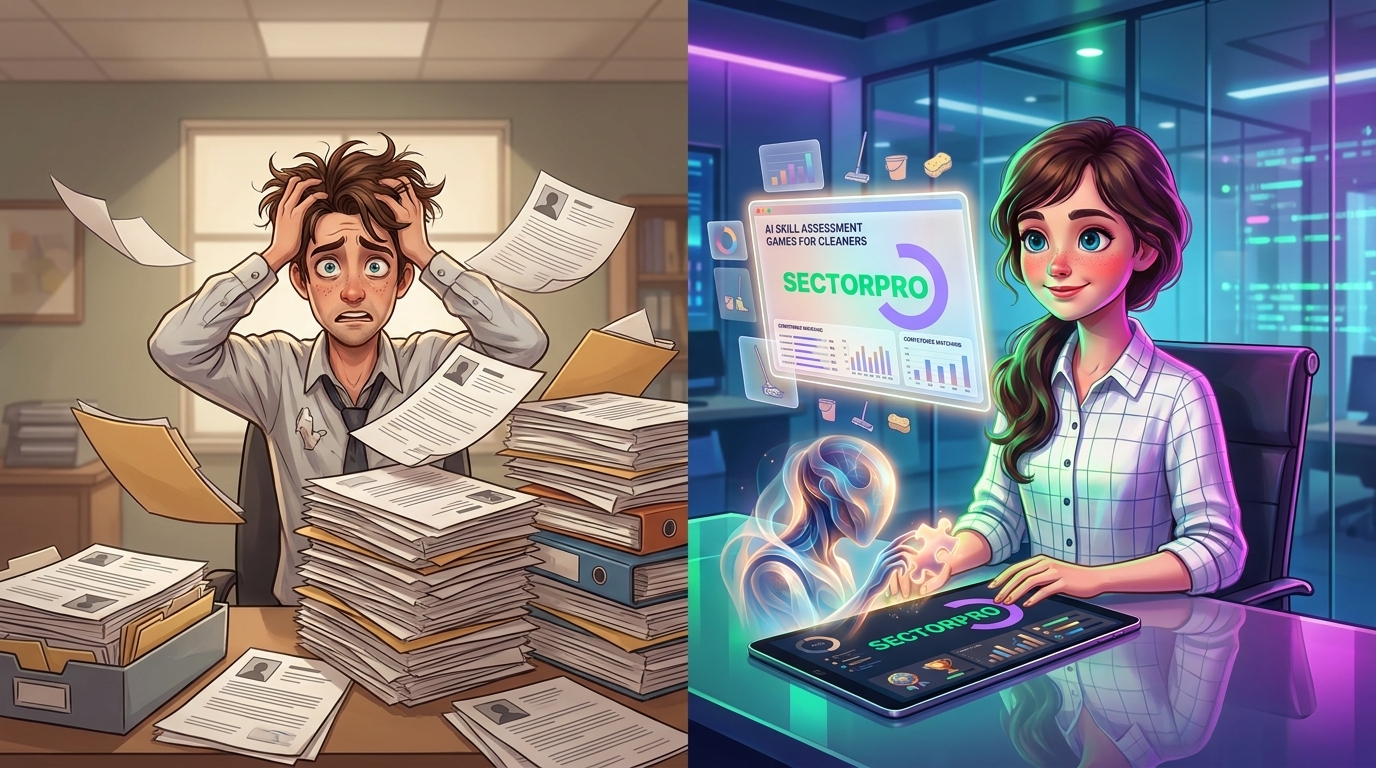
The traditional resume struggles to retain relevance in modern workplaces. Small and medium-sized enterprises rely heavily on these static paper sheets to make critical hiring decisions. This dependence frequently results in endless stacks of unverified claims, unconscious bias, and stressful interviews that rarely reflect actual on-the-job capabilities. To solve this systemic failure, growing businesses increasingly implement automated applicant evaluation systems. Business owners and human resource professionals actively seek smarter, faster, and equitable ways to secure top talent without exhausting their budgets.
By entirely removing outdated curricula vitae from the equation, forward-thinking businesses embrace highly innovative solutions. Organizations modernize talent acquisition by replacing generic documents with dynamic, interactive competency tests. Hiring managers across various industries shift their focus toward raw skill, operational instinct, and cultural alignment. Building a resilient, high-performing workforce demands a complete departure from archaic selection practices.
The hidden expenses of conventional screening procedures
Every new hire represents a critical financial investment for growing enterprises. The standard recruitment process carries fundamental flaws that compromise this investment from the very beginning. Hiring managers sort through hundreds of resumes, effectively reviewing heavily polished marketing documents rather than verifiable proof of competence. This overwhelming reliance on surface-level claims introduces significant hidden costs that drain organizational resources.
Unconscious bias immediately compromises the selection process. Well-intentioned human resource professionals naturally experience swaying based on names, educational backgrounds, or previous employers. Highly capable individuals who simply lack refined formatting skills often find themselves overlooked. This filtering effect aggressively narrows the available talent pool and stifles genuine workplace diversity.
Standard interview procedures notoriously fail to predict actual job performance. Charismatic candidates often excel during verbal discussions while lacking the technical or practical skills required for daily operations.
A candidate might possess exceptional communication skills during an interview, yet completely fail to execute basic technical requirements once officially hired.
Conversely, highly skilled professionals frequently struggle with interview anxiety, completely failing to demonstrate their true potential under artificial pressure. The time wasted screening unqualified individuals and conducting redundant interviews translates into massive financial losses. Transitioning away from manual screening toward structured data analysis serves as a financial imperative for competitive enterprises.
Replacing traditional interviews with automated applicant evaluation systems
Immersive, interactive simulations completely replace grueling verbal interrogations. Rather than asking professionals how they might handle specific workplace crises, modern software places them directly into virtual scenarios to measure real-time reactions. Gamification taps into basic human psychology, encouraging individuals to perform naturally and intuitively. This environment quickly reveals their true operational instincts without the fatigue associated with traditional questionnaires.
Automated applicant evaluation systems utilize these interactive tests to redefine capability measurement completely. Platforms simulate real-world tasks to extract granular data on problem-solving abilities, processing speed, accuracy, and emotional intelligence. Technical candidates might debug code within a secure simulated environment, while customer service professionals navigate complex client interaction trees.
Interactive and frictionless assessments cause candidate drop-off rates to plummet drastically. Applicants genuinely enjoy the application process when they face engaging challenges instead of tedious forms. Industry data indicates that game-based cognitive assessments predict job performance with significantly greater accuracy than traditional self-reported personality tests. Furthermore, interactive interfaces provide hiring managers with a rich, multifaceted view of cognitive and behavioral traits.
Neutralizing unconscious bias using automated applicant evaluation systems
Unconscious bias persists as one of the most stubborn challenges in human resources. Regardless of extensive diversity training, human beings instinctively make snap judgments based on familiarity and deep-rooted social conditioning. Artificial intelligence acts as the ultimate equalizer by removing demographic visibility from the initial screening phase. Data-first approaches evaluate professionals completely blind, focusing exclusively on raw performance metrics rather than personal background information.
Automated applicant evaluation systems guarantee that algorithms do not know an applicant’s age, gender, race, or educational pedigree. The software only analyzes how effectively the individual navigated their assigned capability assessment. This objective methodology democratizes the hiring pipeline, ensuring that every professional competes on an entirely level playing field. Machine learning analyzes thousands of data points generated during interactive tests, identifying patterns that strongly correlate with occupational success.
This capability empowers organizations to grade and rank talent based purely on mathematical merit. Sectors that traditionally struggle with diversity unlock entirely new demographic pools by eliminating subjective human filtering. Capable individuals who previously faced rejection from legacy tracking software due to missing keywords or non-traditional degrees finally receive proper consideration.
Industry-specific customization for accurate capability measurement
Generic cognitive tests fundamentally lack contextual relevance. Standard logic puzzles do not accurately predict how healthcare workers will respond to sudden patient emergencies. They similarly fail to indicate how construction supervisors handle critical safety hazards on bustling sites. Truly accurate skills-based hiring requires hyper-relevant evaluations tailored to distinct industrial requirements. Generic testing consistently falls short in highly competitive markets where specialized knowledge dictates immediate success.
Tailoring situational tests to distinct industries ensures that businesses validate precisely the skills needed for immediate deployment. Specialized software platforms excel by providing highly relevant assessments spanning technology, healthcare, manufacturing, and hospitality. Cleaning service evaluations might test attention to detail, time management, and safety protocol comprehension within simulated commercial environments.
This intense level of customization ensures that collected data directly applies to the daily operational demands of specific roles. Professionals deeply appreciate this respectful approach, recognizing that employers genuinely value their specific expertise rather than subjecting them to abstract corporate hurdles. Small and medium-sized enterprises confidently hire individuals possessing the exact applied instincts required to excel in their unique environments.
Forecasting workforce longevity through automated applicant evaluation systems
Securing the right person constitutes only half the battle; retaining them presents an entirely separate challenge. High employee turnover acts as a notorious profit-killer, with replacement costs frequently reaching double the departed employee’s annual salary. Traditional methods offer minimal insight regarding an applicant’s long-term viability or cultural compatibility. Modern recruitment tools completely change this dynamic by integrating predictive retention analytics into the evaluation phase.
Behavioral data collected during interactive assessments forecasts long-term stability with remarkable precision. Algorithms track much more than simple right and wrong answers. They actively monitor decision-making speed, risk tolerance, adaptability, and distinct problem-solving styles. Comparing this behavioral footprint against the profiles of highly successful, long-term employees yields accurate cultural fit predictions. Ethical implementation remains crucial, making resources on transparency and AI hiring guidelines essential reading for strategic planning.
Hiring managers receive actionable intelligence highlighting candidates who demonstrate the highest likelihood of thriving over extended periods. Operating with tight profit margins makes the ability to forecast longevity an incredible competitive advantage. Recruitment transforms from a reactive necessity into a highly strategic workforce planning initiative.
Accelerating administrative workflows with automated applicant evaluation systems
Human resource professionals operating within growing businesses frequently wear multiple operational hats. They lack the necessary hours to manually review hundreds of applications, schedule endless initial screening calls, and compile complex performance reports. The administrative burden of traditional hiring proves overwhelming and consistently causes costly delays. Top talent quickly accepts offers from faster-moving competitors while slower organizations struggle with manual paperwork.
Adopting technologies that drastically reduce administrative friction becomes absolutely indispensable. Modern platforms act as tireless digital assistants that take control the moment an applicant clicks the application link. The software seamlessly guides the user through the interactive interface, administers the assessment, and instantly processes the mathematical results. Within minutes, the algorithms automatically grade, rank, and categorize the talent pool based on raw performance data.
Human resource teams review clean, prioritized dashboards displaying top performers, eliminating hours of tedious manual screening. This automation allows managers to focus their limited energy on conducting meaningful final-round discussions. For organizations studying the broader impact of technology on localized hiring pipelines, exploring otomatisasi penyaringan kandidat bentuk formasi tim unggul provides excellent additional perspective. Streamlining workflows dramatically accelerates time-to-hire while maximizing resource efficiency.
Building a resilient workforce for the future
The future of recruitment clearly belongs to businesses willing to discard outdated practices and embrace technological innovation. Traditional resumes and stressful, bias-prone interviews fail to meet the demands of a fast-paced, highly competitive talent market. The ongoing shift toward interactive capability assessments represents a fundamental evolution in identifying, evaluating, and securing human potential. Organizations finally replace subjective guesswork with hard, objective performance data.
The organizational benefits remain entirely undeniable. Eliminating unconscious human bias through algorithmic screening democratizes opportunities while elevating structural diversity. Forecasting employee longevity with predictive analytics empowers small and medium-sized businesses to operate with the hiring precision of massive global enterprises. Focusing on real operational instincts tailored through sector-specific scenarios improves hire quality while dramatically enhancing overall employer branding.
As digital tools advance, accelerated administrative workflows and interactive applicant interfaces set the standard expectation for top-tier professionals. Relying on static sheets of paper fails to capture true cognitive capabilities or behavioral adaptability. Modernizing talent acquisition strategies ensures that businesses build resilient, high-performing teams based purely on genuine, verified skills.
