
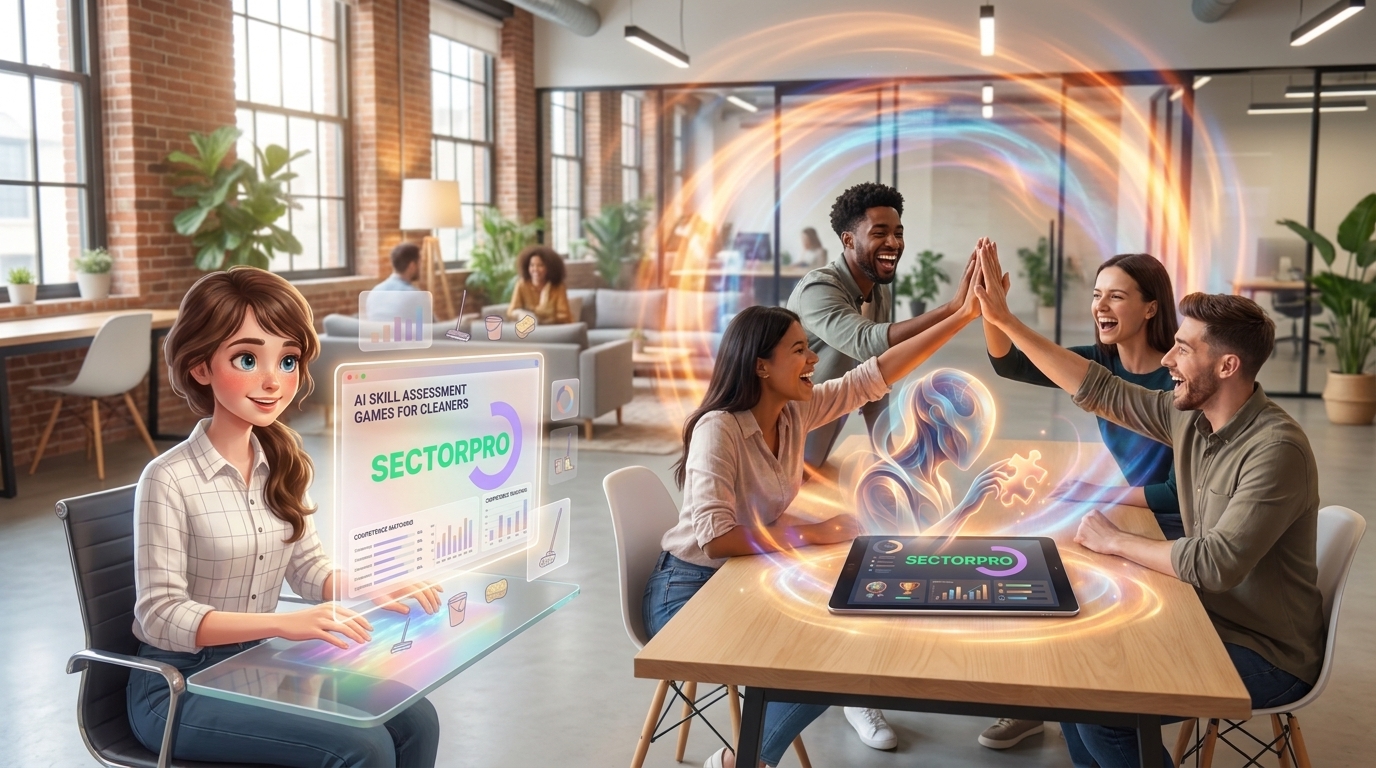
The digital recruitment landscape forces organizations to adapt their evaluation methodologies. Traditional resumes fail to capture a candidate’s true potential. Job seekers construct highly optimized applications, blurring the line between genuine operational skills and carefully crafted buzzwords. Small and medium-sized enterprises face massive challenges when relying on static paper to gauge applicant capabilities. Hiring mistakes cost companies valuable resources and time. Organizations need tools that cut through the noise to deliver actionable performance data. Interactive talent evaluation provides the solution by measuring what candidates can actually execute in real-world scenarios. This dynamic approach replaces stressful interviews with engaging simulations that pinpoint true operational instincts. Businesses across the tech, healthcare, and construction sectors consider this evolution a fundamental necessity for accurate and efficient recruitment.
The structural collapse of the traditional resume
Many organizations still cling to outdated candidate evaluation methods. The traditional resume sits at the center of this stagnation. Historically, a curriculum vitae served as a reliable indicator of professional experience. Today, it functions primarily as a document optimized for search engines and automated tracking systems. Generative text tools allow applicants to mask their true operational readiness behind polished phrasing. Small businesses lack the dedicated resources to verify every self-reported claim manually. This massive signal-to-noise ratio drop leaves human resource teams sifting through identical applications. Hiring managers invite candidates to interviews who sound spectacular on paper but lack practical execution skills.
A bad hire disrupts core operations in fast-paced environments like technology and healthcare. Precision and competence remain non-negotiable traits for these critical roles. The failure of the traditional resume necessitates a radical shift toward objective performance metrics. Companies can no longer afford to guess whether an applicant possesses the required competencies. Evaluating candidates based on direct actions rather than self-reported achievements delivers a clearer picture of their organizational value. Brilliant technicians and dedicated healthcare workers often struggle to articulate their value on a static page. Moving past the outdated resume model creates a more equitable and highly effective hiring framework.
Interactive talent evaluation transforms candidate experiences
Gamification in human resources represents a profound departure from exhausting testing environments. Traditional cognitive assessments cause candidate drop-off and yield skewed results driven by stress. Interactive talent evaluation revolutionizes this dynamic by immersing applicants in engaging simulations. These modern micro-games measure critical cognitive traits, risk appetite, and problem-solving skills seamlessly. Organizations transform the candidate experience by replacing rigid questionnaires with visual, intuitive applicant interfaces. This frictionless process attracts top-tier, tech-savvy professionals who appreciate modern technology. Engaging assessments ensure that the collected data reflects genuine workplace behavior rather than interview anxiety.
Interactive testing democratizes the application process for everyone involved. Individuals who experience severe anxiety during formal interviews often possess the exact skills required for the role. Gamified environments reveal the underlying competencies of an applicant by focusing purely on behavioral responses to dynamic stimuli. A candidate applying for a demanding healthcare position demonstrates their ability to prioritize tasks and manage workflows smoothly. Hiring managers receive a comprehensive understanding of candidate strengths. Job seekers appreciate the opportunity to showcase their abilities in a format that respects their time. This positive perception elevates the employer brand identity in a highly competitive market.
Overcoming unconscious bias with objective performance data
Human bias remains a stubborn obstacle in the pursuit of capable, diverse workforces. Hiring managers often make snap judgments based on a candidate’s name, educational background, or socioeconomic status. These unconscious prejudices systematically exclude highly qualified individuals from the talent pool. Artificial intelligence strips away demographic identifiers to evaluate applicants strictly on merit. Bias-free screening systems focus purely on raw performance data generated during the assessment phase. An artificial intelligence system grades a gamified simulation without caring where the candidate went to school. It registers reaction times, problem-solving efficiency, and behavioral patterns exclusively.
Eliminating bias acts as a critical business strategy that drives innovation. Diverse teams consistently outperform homogenous groups in creativity, market adaptability, and complex problem-solving. Small and medium-sized enterprises gain immense value from a fair recruitment process that leverages unique perspectives. Deploying unbiased screening tools also protects companies from potential legal risks regarding anti-discrimination compliance. Relying on objective data safeguards the integrity of the hiring process. Candidates know the company judges them solely on their skills. This systematic fairness fosters a culture of trust and transparency from the very first interaction. Adopting a skills-based hiring approach empowers companies to find exceptional talent based on verifiable competence.
Customizing assessment scenarios for specific industries
Generic pre-employment testing fails to account for the unique demands of different industries. A corporate sales personality test provides zero actionable insight when evaluating a specialized construction worker. Assessments must reflect the actual environment the candidate will navigate to achieve true predictive validity. Sector-specific scenarios validate the precise skills necessary for success in distinct operational landscapes. Interactive talent evaluation allows hiring managers to observe candidates in their natural professional element. A technology sector simulation requires an applicant to prioritize sudden support tickets or identify software flaws. Healthcare candidates navigate simulated patient triage situations to demonstrate critical decision-making under pressure.
Contextualizing the evaluation gives employers a deep understanding of industry-specific performance. Construction and cleaning sectors demand strict adherence to safety protocols and procedural compliance. A simulation for a cleaning supervisor tests their ability to manage hazardous materials or optimize shift schedules. These practical evaluations bridge the gap between theoretical knowledge and hands-on execution. Small business owners hire individuals who require significantly less onboarding time because they prove their operational instincts beforehand. Tailoring the assessment sharpens the accuracy of the hiring decision and signals respect for the candidate’s chosen profession.
Leveraging predictive analytics to boost employee retention
Attracting top talent represents only half the battle in modern recruitment. High employee turnover drains resources, disrupts workflows, and damages overall team morale. Small and medium-sized enterprises feel this impact acutely because every team member plays a pivotal role. Traditional hiring relies heavily on intuition to determine long-term cultural fit. Predictive hiring analytics replace gut feelings with hard behavioral data to forecast retention viability. Artificial intelligence analyzes the vast amounts of data generated during interactive talent evaluation to identify success patterns. These models examine problem-solving approaches, resilience during setbacks, and overall cognitive styles.
Human resource teams compare these behavioral markers against the profiles of historically successful employees. Hiring managers look past immediate job capabilities to ensure candidate traits align with organizational culture. Data-driven retention forecasting provides a massive strategic advantage for growing companies. Human resource departments identify high-risk applicants during the initial screening phase rather than discovering cultural mismatches months later. This proactive approach saves thousands of dollars in lost productivity and rehiring costs. Businesses leverage this technology to build stable, dedicated teams that grow alongside the company. Talent acquisition transforms from a reactive necessity into a proactive driver of business stability.
Automating the administrative workflow for lean human resource teams
The administrative burden of recruitment easily overwhelms lean human resource departments. Reviewing applications, scheduling screenings, and grading assessments consumes massive amounts of valuable time. This manual grind slows down the time-to-hire and increases the likelihood of human error. Top talent frequently accepts offers from faster-moving competitors when forced to wait weeks for a response. Automating the administrative workflow acts as a critical component of a competitive hiring strategy. Modern software serves as a tireless digital assistant that seamlessly manages recruitment logistics. Organizations deploy automated applicant evaluation systems for modern teams to drastically reduce processing times.
The system instantly grades performance and analyzes raw data once a candidate completes an assessment. Artificial intelligence ranks the applicant pool based on objective scores without manual intervention. Hiring managers spend their valuable time engaging exclusively with the most qualified individuals. Human resource professionals shift their focus toward high-impact initiatives like employer branding and strategic workforce planning. Automation ensures a consistent, responsive experience for the applicants themselves. Candidates receive immediate progression notifications or timely rejections, which enhances the company’s marketplace reputation. This operational efficiency grants small businesses the capacity to process high volumes of applicants with enterprise-level precision.
The future of data-driven talent acquisition
The evolution of talent acquisition demands a permanent departure from outdated subjective methodologies. Small and medium-sized enterprises require precise, objective, and efficient recruitment tools to remain competitive. Embracing artificial intelligence allows businesses to look past self-reported histories and focus entirely on demonstrable skills. Organizations secure candidates who possess the right capabilities and align perfectly with the company culture. Interactive talent evaluation modernizes talent acquisition by replacing stressful interviews with dynamic, engaging simulations. This approach champions diversity by ensuring every applicant competes on a level playing field.
Transitioning to a skills-based screening process empowers human resource teams to operate with unprecedented agility. It turns the heavy administrative burden of recruitment into a streamlined strategic advantage. Organizations adopting these forward-thinking technologies attract top-tier professionals seamlessly. They build the resilient, high-performing teams necessary to navigate complex market challenges. The future of hiring relies entirely on data-driven, interactive, and unequivocally fair methodologies.
